Your Handshake Might Predict Your Lifespan Better Than Your Cholesterol
Doctors have spent decades treating blood pressure and cholesterol as the gold-standard numbers to watch after 60. But a growing pile of research says there's a simpler measurement sitting right in your hands — literally — that predicts how long you'll live with startling accuracy: your grip strength.
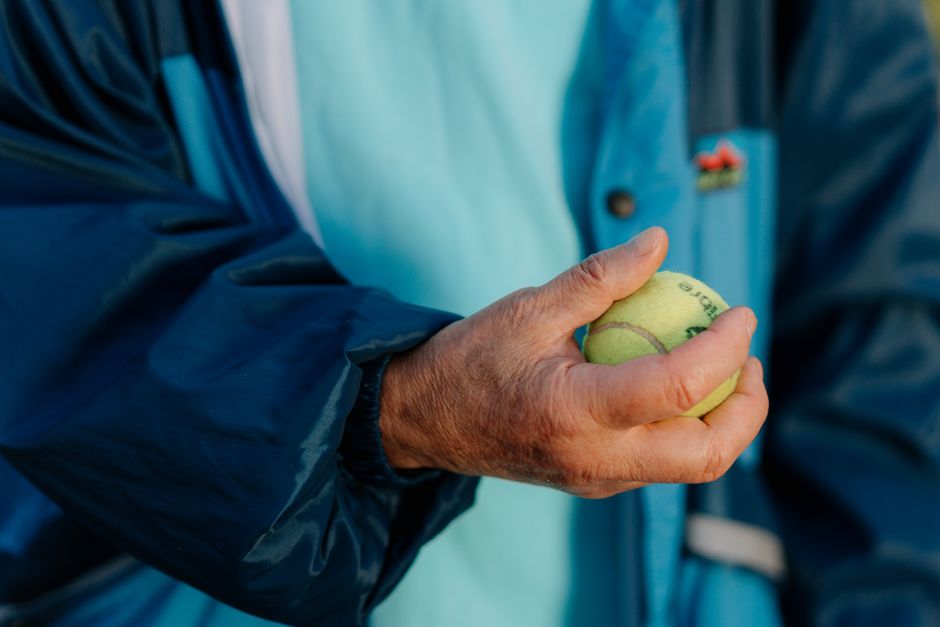
Photo by cottonbro studio on Pexels
A meta-analysis pooling 42 studies and more than 3 million participants found that grip strength is an independent predictor of all-cause mortality, with every 5-kilogram drop in grip strength associated with a 16% higher risk of death from any cause. That's not a small effect. It's the kind of signal that shows up before a diagnosis, before a fall, before a hospital admission.
Why Your Hands Are a Window Into Your Whole Body
Grip strength isn't really about your hands. It's a proxy for total-body muscle mass and neuromuscular function — the same systems that determine whether you can get up from a chair without using your arms, catch yourself if you trip, or recover from surgery without losing your independence.
Researchers call this "sarcopenia" — the age-related loss of muscle mass and strength — and grip strength happens to be one of the easiest places to measure it. Unlike a full-body strength assessment, you don't need a gym or a physical therapist. You just need to squeeze something.
This fits with something I covered in Your Walking Speed Might Predict How Long You'll Live — both measurements are cheap, low-tech stand-ins for the same underlying thing: how much functional muscle and coordination your body has left in reserve. Walking speed tells you about your legs and cardiovascular system. Grip strength tells you about your upper body and overall muscle quality. Together, they're a surprisingly complete picture.
How to Actually Test Yours This Week
You don't need to buy a $150 hand dynamometer, though physical therapy clinics and some pharmacies have them if you want a precise number. A few low-tech alternatives work well enough to flag whether grip is a weak spot:
- Tennis ball squeeze: Squeeze a tennis ball as hard as you can for 10 seconds with each hand. If you can barely dent it, that's worth paying attention to.
- Grocery bag carry: Can you carry two full grocery bags (roughly 15-20 lbs total) from the car to the kitchen in one trip without stopping or switching hands repeatedly?
- Jar test: Can you open a stuck jar lid on the first or second try, without running it under hot water first?
If two or more of these feel genuinely hard — not "annoying," but hard — that's a real signal, not just a bad day.

Photo by Narmin Aliyeva on Pexels
The Numbers Doctors Actually Use
For a more precise benchmark, hand therapists commonly use handgrip dynamometer norms broken down by age and sex. In general clinical screening, a grip strength below roughly 26 kg for men and 16 kg for women over 65 is flagged as a marker of frailty risk — figures drawn from the same body of aging research behind tools like the Fried Frailty Index. If you get access to a dynamometer through a doctor's office or physical therapy clinic, ask where your number falls relative to your age and sex — a single test takes about 30 seconds.
The Good News: Grip Strength Is Trainable at Any Age
Here's the part that should make you optimistic rather than anxious: unlike some biomarkers, grip strength responds to training fast, even in people in their 70s and 80s. You don't need to become a powerlifter.
- Hand grippers: Adjustable resistance grippers cost $10-15 and let you do quick sets while watching TV — 3 sets of 10-15 squeezes per hand, most days of the week.
- Farmer's carries: Pick up two moderately heavy objects (dumbbells, water jugs, even bags of rice) and walk 30-40 feet. This builds grip and full-body stability at once.
- Dead hangs: If you have access to a sturdy bar, even hanging for 10-20 seconds a few times a week builds forearm and grip endurance — start with support from a chair if needed.
- Resistance band work: Wrist curls and finger extensions with a light band counter the "claw" stiffness that develops from years of typing or handwriting.
This is a lower-impact companion to the kind of joint-friendly movement I wrote about in Gentle Ways to Stay Active and Protect Your Joints in Your Golden Years — grip training doesn't stress your knees or hips at all, which makes it one of the easiest strength habits to add regardless of what else is going on with your body.
What This Doesn't Mean
A weak grip today doesn't mean your fate is sealed, and a strong grip isn't a free pass to ignore everything else. Grip strength is a signal, not a verdict — it's correlated with mortality risk because it reflects overall muscle health, not because your hands themselves are doing the damage. Think of it the way you'd think of a "check engine" light: worth investigating, not worth panicking over.
One Thing to Do Today
Grab a tennis ball, a stress ball, or even a rolled-up sock, and squeeze it as hard as you can for 10 seconds with each hand right now. Notice how it feels. Then pick one training method from the list above — hand grippers are the cheapest and easiest to start — and do it for 5 minutes, three times this week. Re-test yourself in a month. That's the whole experiment, and it costs less than a coffee.


Comments
Post a Comment