Half of Americans Over 50 Have Weak Bones. Most Don't Know It
Here's a number that should stop you mid-scroll: roughly 54 million American adults over 50 are living with osteoporosis or low bone mass, according to the Bone Health & Osteoporosis Foundation. That's more than half the people in that age group. And CDC data from 2017-2018 puts the picture in even sharper focus — 43.1% of adults 50 and older have low bone mass, with women hit hardest at 51.5%.
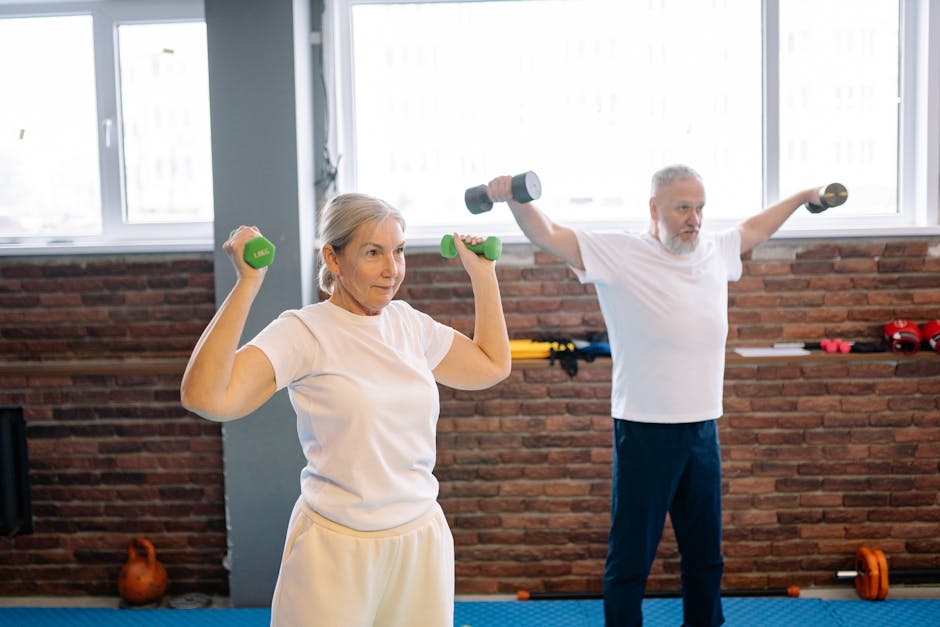
Photo by Yan Krukau on Pexels
The catch is that bone loss doesn't announce itself. You don't feel your spine thinning the way you feel a stiff knee. Most people find out they have osteoporosis the same way: they break a wrist falling off a curb, or a hip after a stumble that should have been nothing.
Why This Connects to Everything Else You've Been Reading About
If you've been following along, you already know your muscle mass declines 3-8% per decade after 60, and that balance — the kind measured by how long you can stand on one leg — starts to erode with it. Bone density is the third leg of that stool. Muscle keeps you upright, balance keeps you from falling, and bone density determines what happens if you do fall anyway. Weak bones turn a stumble that would've been a bruise in your 40s into a hip fracture in your 70s.
That's why this isn't a topic to file away for "someday." It's the piece that decides whether a fall is an inconvenience or the event that changes the rest of your life.
The Test Nobody Talks You Into Getting
A DEXA scan (dual-energy X-ray absorptiometry) is the gold standard for measuring bone density, and it takes about 10-15 minutes — you lie down, a machine passes over you, no needles, no discomfort. It gives you a T-score:
- Above -1.0: normal bone density
- -1.0 to -2.5: osteopenia (low bone mass, the warning stage)
- Below -2.5: osteoporosis
Medicare covers a bone density test every 24 months for women 65+ and for men and women with specific risk factors. If you're past 65 and can't remember your last one, that's worth a call to your doctor before your next physical — not after.

The Exercise That Actually Rebuilds Bone (Not Just Slows the Loss)
Here's where it gets genuinely encouraging. For years, the advice for osteoporosis was cautious to the point of unhelpful: walk gently, avoid strain, don't lift anything heavy. Then the LIFTMOR trial, published in the Journal of Bone and Mineral Research in 2018, tested something bolder on 101 postmenopausal women with low bone mass, average age 65.
Twice a week for eight months, one group did supervised high-intensity resistance and impact training — lifting at more than 85% of their one-rep max, plus jumping drills. The results: lumbar spine bone density increased 2.9%, while the control group's dropped 1.2%. Femoral neck (hip) density held steady in the exercise group and declined in the control group. No one suffered a vertebral fracture from the heavy lifting — a fear that had kept this kind of training off-limits for osteoporosis patients for decades.
The takeaway isn't that you need to start deadlifting tomorrow without guidance. It's that gentle, low-load exercise alone doesn't rebuild bone — bone responds to mechanical stress, the same way muscle responds to resistance. That's also the logic behind why walking helps a herniated disc but twisting hurts it — the right kind of load matters more than avoiding load altogether.
What "Bone-Building" Actually Looks Like Day to Day
You don't need a barbell and a coach to start. Weight-bearing and resistance movements that challenge your bones in a controlled way include:
- Bodyweight squats and sit-to-stands from a chair (mirrors the LIFTMOR protocol's functional tests)
- Resistance bands or dumbbells, 2-3 sets, pushing to the point of real effort — not just going through the motions
- Stair climbing, which loads the hip and spine far more than flat walking
- Brisk walking or hiking, especially on uneven ground
Swimming and cycling, while great for the heart, don't do much for bone density — there's no impact or load against gravity. If those are your main activities, pair them with 2 sessions a week of something that pushes against resistance.
Calcium and Vitamin D Are the Supporting Cast, Not the Headliner
Diet matters, but it's often oversold as the whole solution. Calcium and vitamin D give your body the raw material to build bone — exercise is the signal that tells your body to actually use it. One without the other is a half-measure. If you're already dialing in your diet, this pairs with what I covered in why a single chicken breast at dinner won't save your muscles after 60 — consistency across the week beats one big effort.
What to Do Today
Call your doctor's office and ask two questions: when was your last bone density test, and are you due for one under Medicare's 24-month coverage window. If you already know you have osteopenia or osteoporosis, ask specifically whether supervised resistance training — not just walking — is safe for your case. That one phone call is the difference between finding out you have a problem after a fracture, and finding out while you still have years to do something about it.


Comments
Post a Comment